
When someone walks into a new home, they probably aren’t thinking about peak energy demand, distribution infrastructure, utility forecasting or integrated energy planning. They are thinking about whether they can afford the home, what their monthly bills will be and whether the heating and cooling systems will keep their family comfortable. But increasingly, those two conversations are becoming inseparable.
Today’s new homes are remarkably different from homes built a generation ago. Better insulation, tighter building envelopes, high-performance windows, smart controls and increasingly sophisticated heating and cooling technologies can dramatically improve energy performance. At the same time, what we ask of our electricity system is changing. Electric vehicles, heat pumps, air conditioning, electric water heating and other technologies are adding new loads. Importantly, utilities don’t simply have to plan for how much electricity and natural gas a household consumes over a year. They must ensure there is enough infrastructure to serve communities when demand peaks.
That distinction matters for consumers because infrastructure isn’t free. If thousands of new homes require substantially more energy capacity, utilities may need new transformers, substations, distribution equipment and potentially upstream infrastructure. Similarly, natural gas infrastructure requires long-term investment and planning. Ultimately, somebody pays for infrastructure, through rates, connection costs, the price of a new home, taxes or some combination thereof.
That is why we need to think about energy before a community is built, not after. Ontario has begun moving in this direction through its first Integrated Energy Plan, Energy for Generations. Rather than planning electricity, natural gas and emerging energy sources largely in separate silos, the province’s approach brings electricity, natural gas, hydrogen and other fuels into a coordinated long-term planning framework.
For homebuyers, that seemingly technical policy shift could become increasingly important. Ontario’s Natural Gas Policy Statement, which forms part of the plan, confirms an ongoing role for natural gas while emphasizing affordability, reliability, resiliency and customer choice. Natural gas currently represents roughly 40 per cent of Ontario’s total energy use, while the province is simultaneously preparing for substantial growth in electricity demand.
This shouldn’t become a simplistic debate about gas versus electricity. A modern community might include highly efficient gas equipment, heat pumps, hybrid systems, electrical load management, thermal energy storage, smart controls or technologies that shift consumption away from peak periods. Different homes and communities may arrive at different solutions.
The more interesting question is whether we can use energy more intelligently while avoiding unnecessary infrastructure costs. For example, if technology allows homes to manage when EVs charge or when certain equipment operates, thousands of homes don’t necessarily have to place their maximum theoretical demand on the electrical grid simultaneously. Similarly, integrated gas and electric solutions may provide opportunities to manage winter peak demand while maintaining reliability and consumer flexibility. These are exactly the kinds of practical questions builders and utilities need to work through together.
That requires much earlier conversations between builders, municipalities, electricity distributors and gas utilities. Housing type, density, phasing, equipment choices and when residents are expected to move in can all affect infrastructure planning.
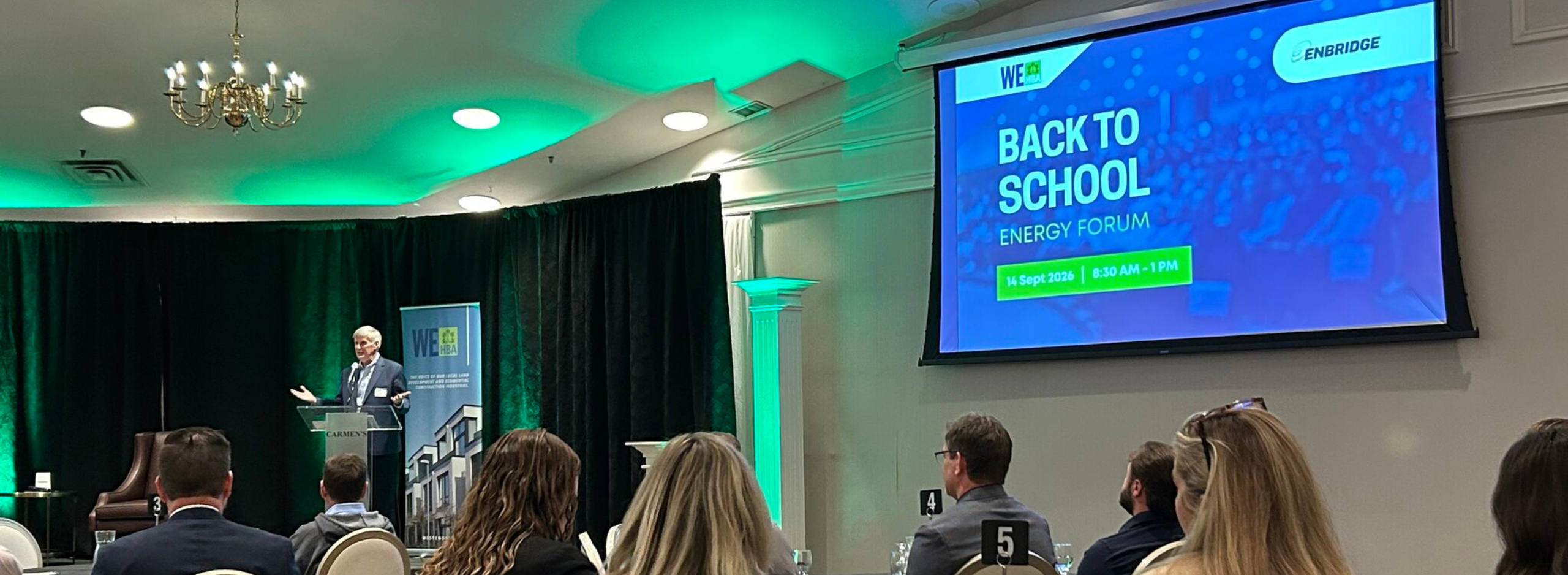
Earlier this month, the West End Home Builders’ Association brought together builders, building-science experts, government representatives, Enbridge Gas, Alectra Utilities, Burlington Hydro and others for our “Back to School” Energy Forum. We didn’t expect everyone in the room to agree on every aspect of Ontario’s energy future. That wasn’t the objective. The value was getting people who design homes, build communities, plan infrastructure and deliver energy into the same room to learn from one another.
Because for Hamilton and Burlington residents considering buying a new energy-efficient home, the goal should ultimately be straightforward: a comfortable home with reasonable energy costs, reliable service and the flexibility to benefit from new technologies as they emerge.
Achieving that simple consumer outcome requires some surprisingly complicated planning. Getting that right requires builders, municipalities, governments and utilities to start talking long before the first homeowner gets the keys.